
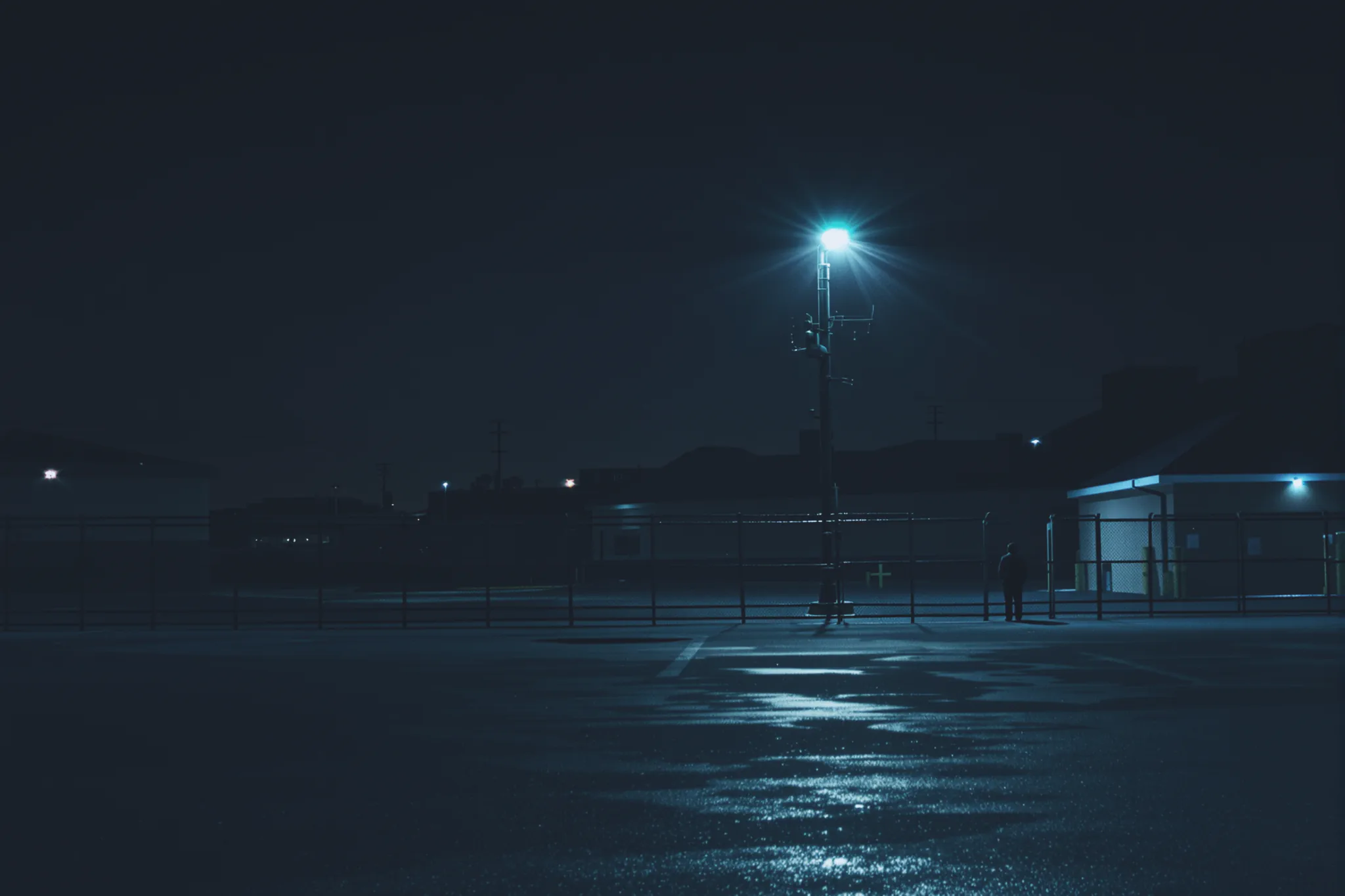
How to stop repeat trespassing on commercial property.
When people keep coming back after hours, the fix is in the property: what draws people in, how to close it off, how to warn without a confrontation, and how to keep a record police can use.
How do I stop people from trespassing on my property at night?
Make the property hard to get into and uncomfortable to stay on: close fence gaps, gate and light sheltered corners, and post your hours at every entrance. Enroll in your police department's trespass program so police can warn people on your behalf, and have the site watched at night, so anyone who comes in hears a recorded warning, with no one confronting anyone.
Warned off without anyone walking up
911 Sentinel camera monitoring watches the doorways, docks, and corners that keep getting used, from $900 a month with the leased camera, installation, maintenance, and 90 days of video included, and added cameras from $250 a month. An alert reaches our team within 30 seconds of someone coming in after hours, and within 3 minutes an operator plays a recorded warning with a siren and spotlights. If the person stays, we call your team, then the police. Nobody approaches anyone, and every night is on video.
For larger properties, drive-by vehicle patrol from $1,500 a month adds scheduled passes by our camera vehicle, and on-site vehicle patrol from $2,200 a month keeps it parked on the property through the window.
Why do people keep coming back?
Repeat trespass is usually about what a property offers after hours: a dry doorway, a recessed loading dock, an unlocked enclosure, an outdoor outlet, or a dark corner nobody checks. When nothing changes from one night to the next, the same spot gets used again. Changing the property is what changes the pattern.
What draws people in, and what closes it off
| What draws people in | Where on the property | What changes it |
|---|---|---|
| Shelter from the rain | Recessed doorways, loading docks, stairwells, overhangs | Gate or fence recessed areas; light them; a camera on each |
| Power and water | Outdoor outlets and hose bibs | Lockable covers; switch off outdoor circuits after hours |
| A way in | Fence gaps, unlocked gates, roof ladders, broken windows | Walk the fence weekly; lock gates; cage ladders; repair quickly |
| Privacy | Dark corners, dumpster enclosures, the back of the lot | Lighting; trimmed landscaping; locked enclosures |
| Things to take | Carts, pallets, scrap, stored material | Store it inside or behind a locked fence |
Post your hours and enroll in your police trespass program
- Post your hours and no-trespassing signs at every entrance. Under Washington law, permission to be on improved land that's open to the public at particular times, and isn't fenced, doesn't extend to other times when notice of the prohibited times is posted conspicuously (RCW 9A.52.010).
- In Seattle, enroll in SPD's Trespass Warning Program: email your precinct for the trespass authorization form, then post the Conditions of Entry sign SPD sends you in a clear location.
- Once enrolled, SPD can contact and warn people on the property on your behalf at all hours, and owners agree to cooperate in the prosecution.
- In Bellevue, private commercial and multi-unit housing owners can enroll in the BPD Trespass Program through Bellevue Police crime prevention at CrimePrevention@bellevuewa.gov.
- Elsewhere, ask your police department whether it keeps a trespass authorization on file.
How do you warn people without a confrontation?
Nobody from your team should go out at night to tell someone to leave. A recorded warning through a camera, a siren, and spotlights tell a person they've been seen, without anyone walking up to them. If they stay, the next call goes to your team, then the police.
If someone on the property seems to need help, call 911 in an emergency. Some cities run outreach teams that can visit: Bellevue's Homelessness Outreach Team takes requests at homelessness@bellevuewa.gov or 425-452-4105, with the owner's written permission to enter the property.
Keep a record
- Log each night: the date, the time, where on the property, and anything left or damaged.
- Report each incident to police, so every one has a report number.
- Keep the video: a timestamped clip gives police the time, the place, and what happened.
- Repair damage and clear what's left quickly, so the property doesn't look unwatched.
Common questions
What can I do if people keep trespassing on my property at night?
Close the gaps they use, light and lock the sheltered spots, post your hours, enroll in your police department's trespass program, and have the property watched at night, so anyone who comes in hears a recorded warning and the police are called if they stay.
Should I confront someone trespassing on my property?
Have them warned from a distance instead: a recorded warning, a siren, and spotlights through a camera tell a person they've been seen, and if they stay, the next call goes to your team or the police. Call 911 in an emergency.
Do no-trespassing signs matter in Washington?
Post them, with your hours, at every entrance. Washington law says permission to be on unfenced land open to the public at particular times does not extend to other times when the prohibited times are posted conspicuously, and Seattle's trespass program asks owners to post its Conditions of Entry sign.
Get a free site assessment
We reply the same day, walk your property with you, and send a written plan with a firm price after the walk.
Business calls 8am–8pm every day · our monitoring team works around the clock