
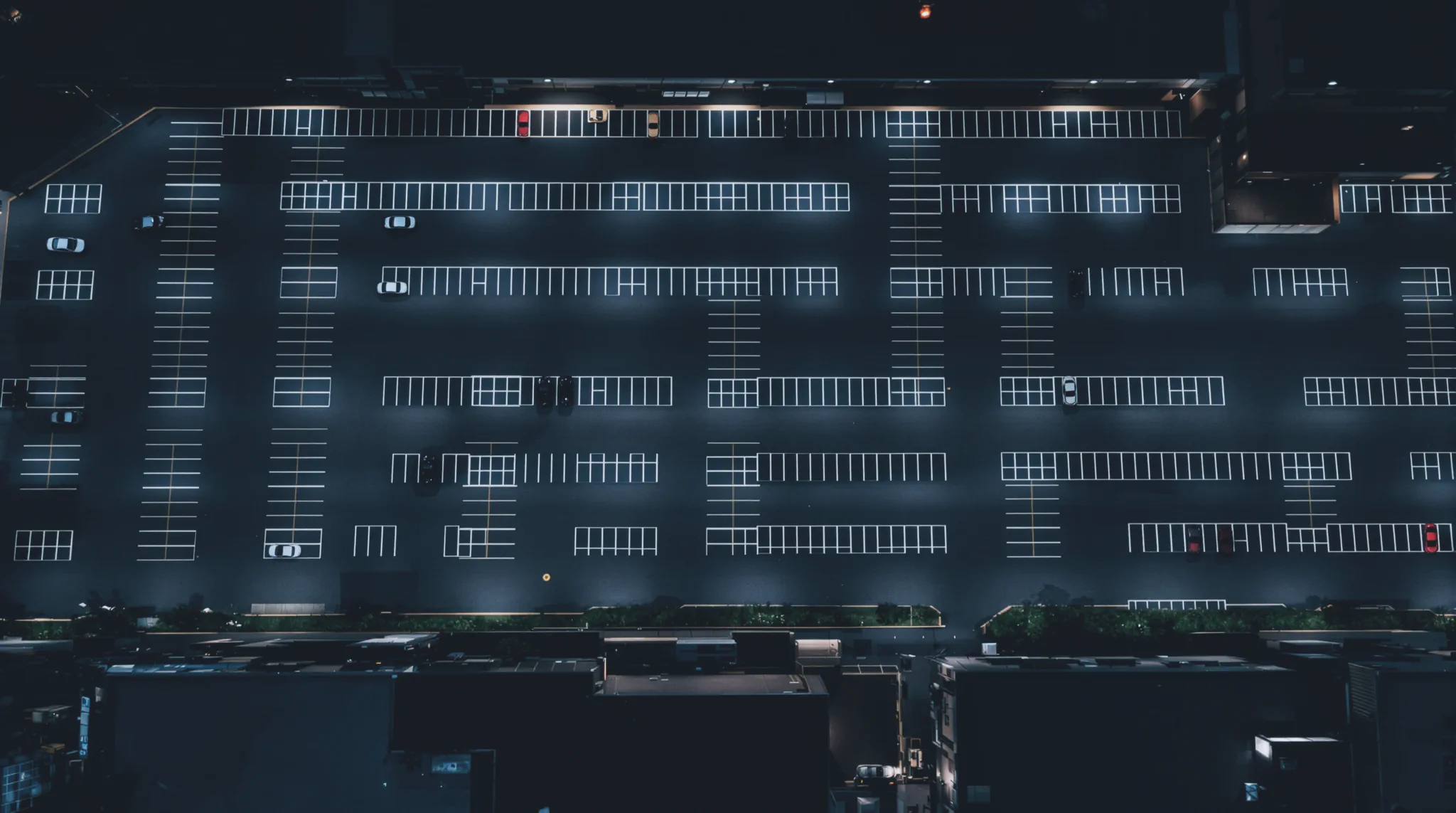
Catalytic converter theft from fleet vehicles.
Why company trucks and vans parked overnight get hit, what Washington's 2025 marking law means for fleet owners, and how to protect a lot.
How do I protect fleet vehicles from catalytic converter theft?
Park fleet vehicles in a fenced, lit lot, close together or against walls so no one can get underneath, etch the last eight digits of each VIN onto its converter, and fit shields on the vehicles easiest to get under. Then have the lot watched overnight, so anyone under a vehicle hears a recorded warning and the police are called.
Someone watching the lot at 3 a.m.
911 Sentinel camera monitoring watches a fleet lot through the night from $900 a month, with the leased camera, installation, maintenance, and 90 days of video included, and added cameras from $250 a month. When a person walks into the rows after hours, an alert reaches our team within 30 seconds, and within 3 minutes an operator warns them through the camera with a recorded voice, siren, and spotlights, then calls your team and the police.
For fleets spread across several yards, drive-by vehicle patrol from $1,500 a month runs our camera vehicle past each one on a schedule, with every pass recorded.
Why do fleet vehicles get hit?
Washington's Legislature found in 2022 that catalytic converter theft had risen rapidly statewide and nationwide, and that victims "often incur costs that far exceed the monetary value of the catalytic converters themselves." For a business, that cost includes a vehicle off the road: a crew that can't roll and a route that doesn't run until the repair is done.
Law enforcement agencies in Washington reported 9,890 thefts of motor vehicle parts or accessories in 2024, the category for parts attached to a vehicle, 7.1% of all larceny-theft. Parking lots and garages were the second most common place for larceny-theft, at 12.3%, according to the Washington Association of Sheriffs and Police Chiefs.
Protect the lot
| What a thief needs | How to take it away |
|---|---|
| Room to get under the vehicle | Park tight together, nose to nose or against walls and fences |
| Darkness | Light the lot, especially the rows where trucks and vans park |
| Easy access | Converter shields or cages on the most exposed vehicles; keep the gate closed after hours |
| A buyer | Etch the last eight digits of the VIN on each converter and mark it with high-heat paint so it's easy to see |
| Time | Cameras on the lot and an operator who warns the person off within minutes |
What did Washington's marking law change?
- Since April 1, 2025, anyone who removes a catalytic converter for a purpose other than maintenance, repair, or demolition, or knowingly has an unmarked detached converter, must mark it with the last eight digits of the originating vehicle's VIN within 24 hours and before it leaves the site (RCW 9A.82.180).
- Unmarked detached converters are subject to immediate seizure by police (RCW 9A.82.180).
- Anyone other than a licensed scrap processor or vehicle wrecker who knowingly possesses or sells unmarked detached converters commits a gross misdemeanor for six or fewer and a class C felony for seven or more (RCW 9A.82.180).
- Facilitating the sale of used converters without first verifying proof of ownership is an unfair practice under the state Consumer Protection Act, and metal property deception carries a $1,000 fine per converter (RCW 9A.56.410).
- For a fleet, a converter etched with the VIN while it's still on the vehicle is already marked the moment it's cut off, which ties it back to your vehicle.
What should you do if a converter is stolen?
- Report it to police with the vehicle's VIN and plate, the time window, and any video.
- Tell police the converter was VIN-marked, if it was.
- Check the rest of the fleet that morning, before vehicles head out.
- Look at where it happened, and move parking, lighting, or cameras before the next night.
Common questions
How do I stop catalytic converter theft from company vans?
Park them inside a lit, fenced lot, tight together so no one can get underneath, etch each converter with the vehicle's VIN, fit shields on the most exposed vans, and have the lot watched overnight, so anyone under a van is warned off and the police are called.
Does Washington require catalytic converters to be marked?
Detached converters must be marked: since April 1, 2025, a converter removed for a purpose other than maintenance, repair, or demolition must carry the last eight digits of its vehicle's VIN within 24 hours, and unmarked detached converters can be seized by police.
How common is vehicle parts theft in Washington?
Washington law enforcement agencies reported 9,890 thefts of motor vehicle parts or accessories in 2024, 7.1% of all larceny-theft in the state, according to the Washington Association of Sheriffs and Police Chiefs.
What does it cost to have a fleet lot watched overnight?
911 Sentinel camera monitoring starts at $900/mo for one leased camera with an 8-hour nightly window, and added cameras start at $250/mo. Anyone who goes under a vehicle hears a recorded warning, and we call your team, then the police.
Get a free site assessment
We reply the same day, walk your property with you, and send a written plan with a firm price after the walk.
Business calls 8am–8pm every day · our monitoring team works around the clock