
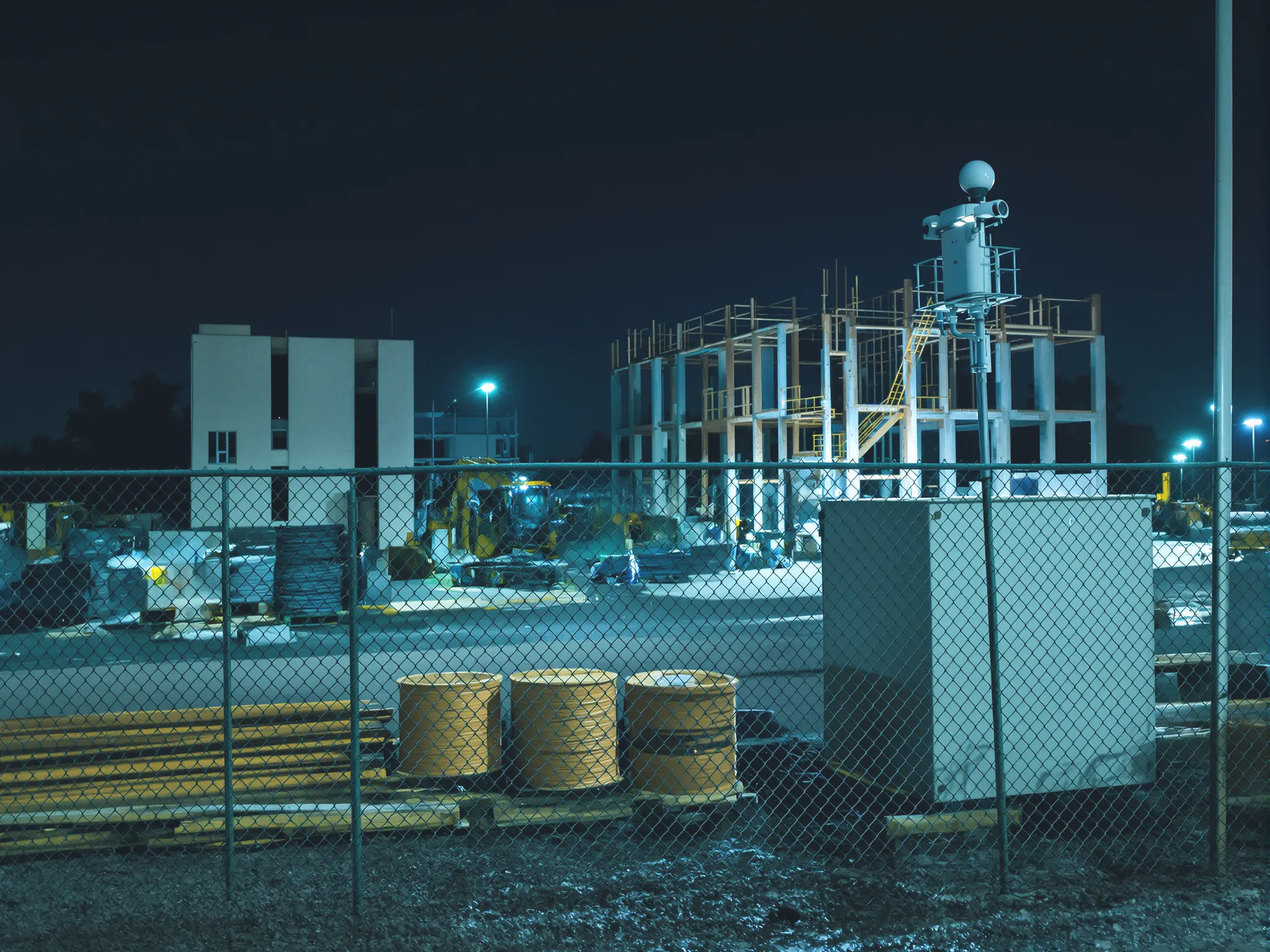
A construction site security checklist.
What to lock down before ground-break, keep up during the build and tighten before close-out, from the fence to the monitoring plan.
What should a construction site security checklist include?
A construction site security checklist covers six things: a closed perimeter fence with locked gates, lighting on gates and material areas, trespass signs at every entrance, locked storage and equipment, tools and wire marked with the company name, and a plan for who watches the site after hours. Set them up before ground-break and check them weekly through close-out.
The monitoring plan, done for you
911 Sentinel walks your site for free, places leased cameras on the gates, laydown area and machine line, and watches them every hour of your window from $900 a month. An alert reaches our team within 30 seconds, and within 3 minutes an operator warns the intruder through the camera, then calls your site contact and the police. Every alert is timestamped with 90 days of video, and drive-by vehicle patrol or drone sweeps cover the sites too big to wire.
What should be in place before ground-break?
- Fence the whole site, keep one gate for vehicles, and chain and lock it every night.
- Keep stacked material back from the fence so it can't be used as a ladder.
- Light the gate, the laydown area and the machine line, and aim the lights where the cameras look.
- Post trespass signs at every entrance, in plain view.
- Book the site walk for cameras; monitoring can start as soon as 5 business days after it.
- Write the after-hours call list: a site contact, a backup, and the police non-emergency number.
- Know what the fence does in law: Washington's criminal code counts a fenced area as a building, and knowingly entering or remaining unlawfully in a building is criminal trespass in the first degree.
What should you check during the build?
- Lock tools and small equipment in a container or gang box at the end of every day.
- Park machines in one line, in view of a camera, and take the keys off site.
- Mark copper, wire and tools with the company name. In Washington, unused copper pipe, tubing and wiring, and any metal marked with a company's name, count as commercial metal property, which a scrap dealer may buy only from a seller with a commercial account, written proof of ownership or written authorization to sell it.
- Keep serial numbers and photos of tools and stored material.
- Schedule wire and fixture deliveries close to when they go in, so they spend fewer nights on site.
- Walk the fence every week for gaps, cut links and climbed sections, and update the camera plan as the layout changes.
What changes before close-out?
- Lock the building itself as soon as doors and windows are in.
- Treat these as the highest-value weeks: installed wire, fixtures and appliances are all on site.
- Add cameras on new doors, the loading area and any new gate.
- Keep monitoring through the last weekend before handover.
- Hand the owner the after-hours call list and the incident records.
Who watches the site after hours?
| Decision | What to settle |
|---|---|
| Hours | When the site is empty: weeknights, weekends and holidays. A base window covers 8 hours a night, and windows run up to 24 hours a day. |
| Camera spots | Each gate, the laydown area, the machine line, and the dark stretches of fence. |
| What happens on an alert | A recorded warning, siren and spotlights through the camera, then your site contact, then the police; 911 right away in an emergency. |
| Who gets called | A site contact and a backup, and how many minutes to wait for an answer before the police are called. |
| Records | Who on your team gets the incident records; 911 Sentinel keeps video 90 days. |
| When to add more | A camera vehicle or drone sweeps for sites too big to wire. |
Common questions
What is the most important part of construction site security?
A closed, locked perimeter that someone watches after hours. The fence and gate slow people down; monitored cameras see them come in, and an operator warns them off within 3 minutes of the alert.
Should construction tools and wire be marked?
Yes. In Washington, metal marked with a company's name counts as commercial metal property, which a scrap dealer may buy only from a seller with a commercial account, written proof of ownership or written authorization to sell it.
How much does construction site monitoring cost?
911 Sentinel camera monitoring starts at $900 a month for one leased camera with installation, maintenance and an 8-hour window, and each added camera is from $250 a month.
Get a free site assessment
We reply the same day, walk your property with you, and send a written plan with a firm price after the walk.
Business calls 8am–8pm every day · our monitoring team works around the clock